
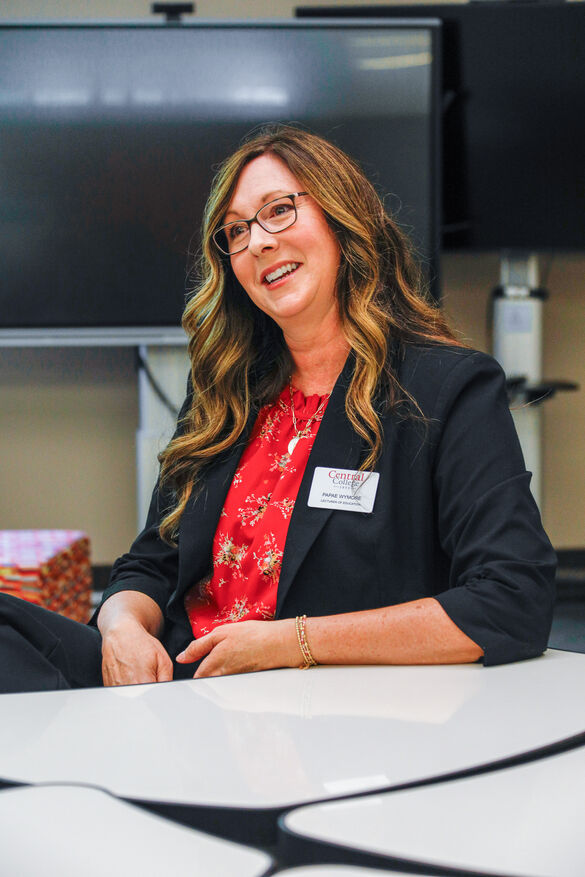
When Central College lecturer Papae Wymore learned that many of her students in the educator preparation program would now be required to take the Foundations of Reading test, she knew she needed more details to help them fully prepare for it. So, she signed up and took the test herself.
“I tell my students I don’t expect them to do something that I wouldn’t do myself,” she said. “It was important for me to see firsthand what it was like to take the test, as a professor who is providing instruction, guidance and support. I wanted my knowledge and how I’m delivering instruction to align with what is most helpful for the students who are preparing for the test and continuing their journey toward becoming a teacher.”
In May 2024, Governor Kim Reynolds enacted House File 2618, establishing the requirement for the Foundations of Reading test for teacher candidates with specific endorsements. Now, prior to program completion, teacher candidates must demonstrate an understanding of the Science of Reading and evidence-based literacy instruction on the test.
“The Foundations of Reading test is another way Iowa ensures our future teachers are well-equipped to provide high-quality literacy instruction for all students,” said Maryam Rod Szabo, administrative consultant for teacher quality at the Iowa Department of Education. “The exam provides a useful assessment that is consistent across the many institutions and educator preparation programs in Iowa. With this standardized test, students can understand their current aptitude while educator preparation programs can review their curriculum and instruction and schools can feel confident in their hiring.”
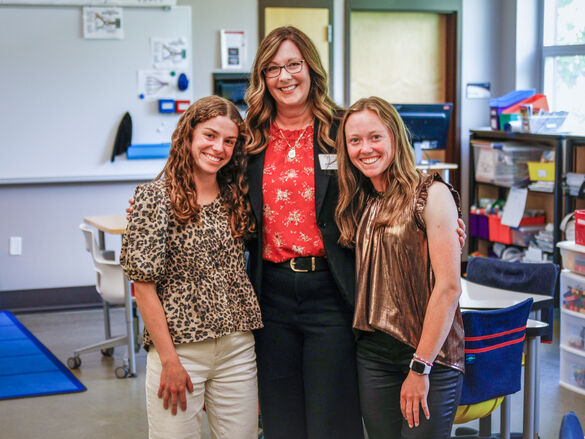
For Wymore, a 10-year higher education professional, and Central’s educator preparation team, they took a proactive approach to the new requirement. First, they developed a one-credit course specifically focused on the Foundations of Reading test to help students prepare. They also used the opportunity to review their course content and schedule and strengthen areas where students needed more support.
“Our students take the test during or after their reading clinical experience. We were intentional about ensuring teacher candidates had opportunities to work with children before taking the exam,” Wymore said. “The reading clinic gives them firsthand experience with literacy assessment and intervention, which helps them better respond to the constructed-response questions by connecting their content knowledge to authentic student needs. That experience builds not only test readiness but the practical skills they need as beginning teachers.”
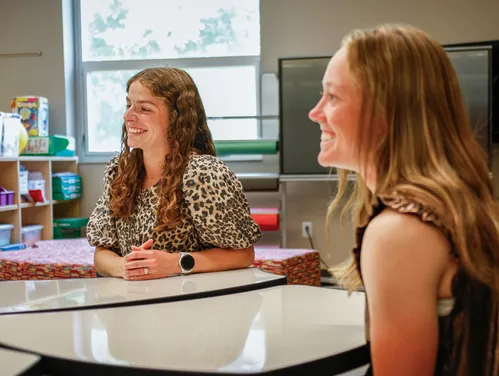
Rylee Dunkin, an incoming senior in Central’s educator preparation program, was one of the many students who took the one-credit course, which covered various lessons and provided online practice exams, videos and resources. She stated that the overall educator preparation course provided her with the tools and confidence needed to pass the test.
“You’re always a little nervous for a test, but I knew that I was equipped with the knowledge to pass,” Dunkin said. “All of the resources, practice time with students in classrooms and just asking questions with professors helped me know that I was ready and did have the content knowledge for it.”
Although the test provides an additional requirement as well as stressors for students, it also is seen as a highly valuable opportunity to strengthen skills and expand their literacy instruction knowledge and strategies. Emily McMartin, a 2026 Central graduate who will start teaching second grade this month, noted how the test will benefit her as a new teacher.
“I think it’s very valuable,” McMartin said, “The Science of Reading is a huge aspect for how teachers approach literacy instruction and reading. The Foundations of Reading test forces us to really understand and learn evidence-based instruction and what skills we need to best support students.”
Since 2024, Central has successfully prepared three student cohorts for the Foundations of Reading test. The first reporting period in 2025 showed Central with a high passing rate of 73%, and Wymore anticipates even higher numbers in the next reporting period. From the tests, both students and the educator preparation program have gained insight into current strengths and weaknesses.
“Analyzing the data from the tests helps us to continually review strengths and potential weak areas in our course curriculum and instruction,” Wymore said. “We can dig into the data and see where we need to provide more support. It could be anything from improving course content to practicing how to take a standardized test that has multiple choice and constructed-response questions.”
For students at Central who do not pass the test on the first attempt, they are required to complete additional learning modules and writing requirements as remediation, providing an alternative opportunity to build skills and knowledge of literacy instruction.
“We let students know that this is just one test; it doesn’t define you,” Wymore said. “Students who struggled on the test can successfully learn the content through further study and identifying areas where they can improve.”
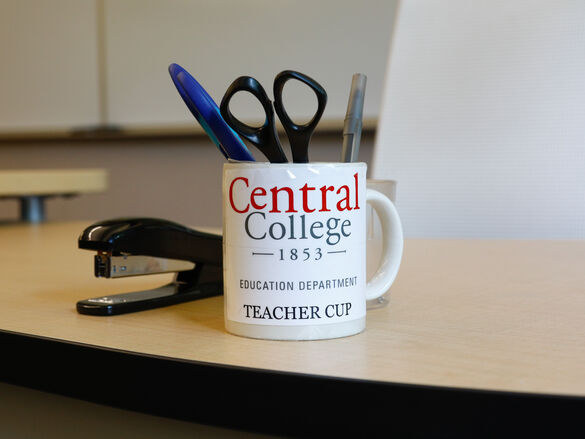
Preparation for the Foundations of Reading test is only one small part of the intensive, overall educator preparation program at Central. Along with an enriched course curriculum, the program offers students with hands-on learning opportunities at local K-12 school districts. These enriched experiences allow students to practice classroom management with students, plan actual lessons and get feedback from mentoring teachers. Through Central’s educator preparation program, students can truly develop their competency in instruction and planning strategies and strengthen their passion for teaching.
“I feel like I’ve always known that I wanted to become a teacher, and Central is providing me with the opportunities to get there,” Dunkin said. “You can see the intentionality in their classes and how they support us. We get a ton of feedback on lesson assignments, and they set a good example of how to go above and beyond for students.”
For Wymore, she noted that Central’s achievements in incorporating the Foundations of Reading test and the educator preparation program in general are due to their dedicated faculty members, who prioritize continuing education as well as collaboration with other educators across the state and the nation. She also emphasized how valuable it was for her to take an honest look at their courses as well as the Foundations of Reading exam, herself, to get a better picture of how best to provide instruction and set students up for success, both at Central and in their future classrooms.
“Strong educator preparation programs are needed now more than ever,” Wymore said. “We owe it to our preservice teachers to provide evidence-aligned content, methodology and plenty of practicum experiences in diverse placements. Our students will be building and supporting literacy and reading for the next generation, so having a high-quality program isn’t a choice, it’s a must.”