
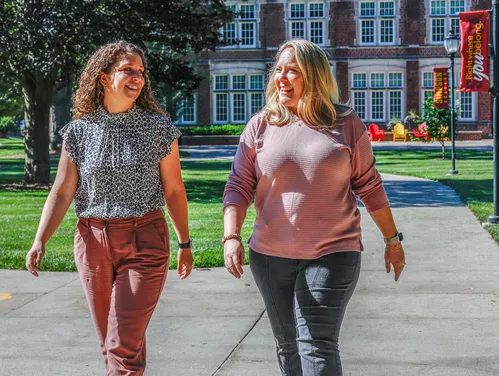

This fall, 21-year-old Simpson College student Grace Ruelle will enter the final year of her educator preparation program with a feeling of excitement, confidence and readiness for the classroom.
“Simpson’s program has definitely helped me feel prepared to go into the teaching field after graduation,” she said. “Even though I have a year to go, I have already learned so much from my professors and have had many opportunities to apply classroom lessons to real-world applications, like one-on-one tutoring with elementary students and preparing actual lessons.”
Ruelle, who is working toward a future career as an elementary education teacher, noted the educator preparation program at Simpson has provided her with a variety of experiences that have strengthened her knowledge and classroom management skills. Among several learning experiences, she has taken part in classroom observations to explore what grade level she is interested in and paired with a mentor elementary teacher to prepare and teach lessons to students. She has reviewed and used data to make decisions on her instruction with individual students and to implement new strategies. She has also participated in a reading practicum, student tutoring and reading club, which have provided additional opportunities to work directly with K-12 students and hone her skills before starting her semester of student teaching next spring.
“It is so much different when you are actually in the classroom, so I’m glad to have that experience, seeing students and classroom management, first-hand,” Ruelle said. “It has been really helpful to work with mentor teachers to see what they do in the classroom and how they use data to identify strengths and weaknesses. I really liked learning from my mentor teacher and having the opportunity to tutor and act as a teacher myself.”
Educator preparation programs across the state, like Simpson’s, provide high-quality learning experiences for Iowa’s next generation of teachers. Programs must consistently align and adjust to new requirements, evidence-based practices and emerging strategies, requiring institutions to stay nimble, review processes regularly and make real-time changes that can impact student success.
One recent change focused on the enactment of House File 2618 in 2024, which requires teacher candidates with certain endorsements to take the Foundations of Reading exam prior to licensure. The exam assesses how well teacher candidates understand the Science of Reading and evidence-based literacy instruction. With this new requirement, many educator preparation programs took the opportunity to find unique ways to best support and prepare students for the exam.
“Educator preparation programs already cover a large amount of coursework and opportunities for practice with students in four short years, so adding in a new requirement for program completion is a no easy feat,” said Maryam Rod Szabo, administrative consultant for teacher quality at the Iowa Department of Education. “Strong educator prep programs help ensure Iowa has a strong talent pipeline for the future. It has been impressive to see how these postsecondary institutions have stepped up and adopted new practices to help students understand the concepts and strategies covered on the Foundations of Reading assessment.”
For Simpson College staff, the Foundations of Reading exam requirement provided an opportunity to re-evaluate their course schedule and further strengthen course instruction, building upon their previous work that revamped their curriculum map. College staff stressed that the content and knowledge-building, not the exam, was their focus for the change.
“Our goal is to prepare you for your first day as a teacher rather than just passing the exam,” said Kate Lerseth, associate dean of general education and assessment at Simpson College. “Through our review of our curriculum map and initial scores from the Foundations of Reading exam, we’ve identified where to beef things up in our course instruction. We want students to feel assured that anything on the exam is already integrated into the things they are learning.”
Although Ruelle described her experience of taking the Foundations of Reading exam as ‘nerve wracking,’ she also reported feeling well-prepared, attributing her successful passing score to the support she found through Simpson’s educator preparation program and staff.
“The course work itself helped me prepare for the Foundations of Reading exam, and the professors were eager to answer any questions I had,” Ruelle said. “Everything I saw on the test, I had already learned. Whether it was analyzing data, making data-driven decisions, identifying challenges with students or using instruction to teach foundational reading skills, we covered it in our courses and through practice.”
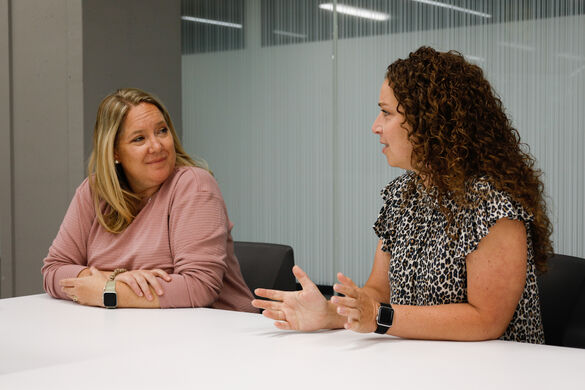
For the Foundations of Reading exam, Simpson College has one of the highest passing rates in the state for teacher candidates. Taken during their junior year of the educator preparation program, 75% of Simpson’s students pass the exam on their first attempt. Teacher candidates in Iowa are not required to pass the exam to apply for teacher licensure, and all educator preparation programs must provide an option for remediation if a student does not pass. Simpson currently offers a two-credit online course as an alternative for anyone who does not pass the exam. However, thus far, all students at Simpson who do not pass the exam on their first try have chosen to retake the test, and all have passed in their second attempt, which is a further testament to the institution’s instruction and support.
While the Foundations of Reading exam adds another requirement for many teacher candidates in Iowa, Simpson’s staff have noted its importance in providing useful information about the progress for both the program and students. It is now another tool and data point within their course that helps to ensure future teachers are well-prepared for literacy instruction.
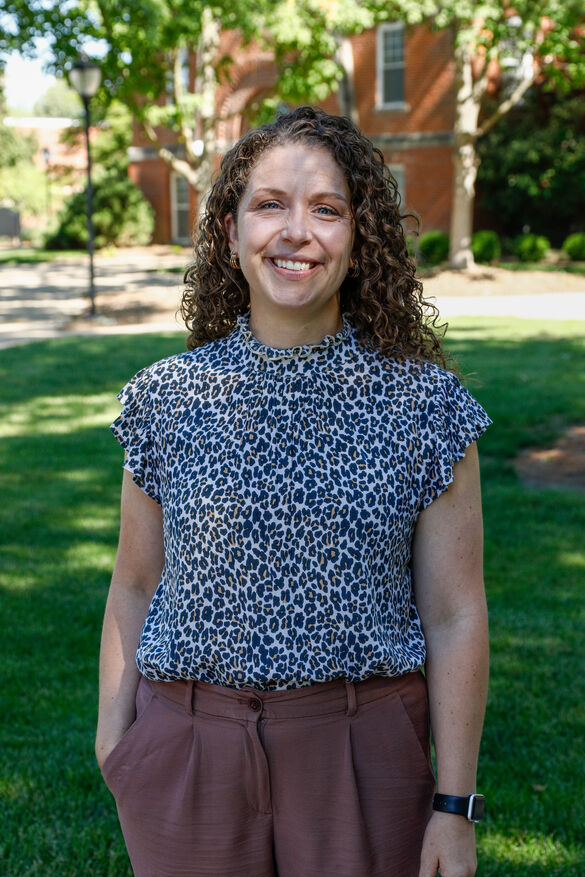
“We tell our students that this is not the end point for them; it’s really just a snapshot in time that can provide all of us with some details on how to move forward,” said Meredith Hunt, literacy professor at Simpson College. “We take a practice test in the fall, and most of the students fail, which is eye-opening for many of them. By the time they get to the actual exam, they are ready to show what they have learned from their regular coursework. When the scores come back, we can see where things are and what the health of our program is.”
Simpson’s educator preparation program is led by faculty with extensive experience in K-12 schools and offers innovative opportunities for students to partner with local school districts. Through these connections, students can learn, explore and make connections with other teachers and potential employers in the field, creating pathways to career opportunities and future success.
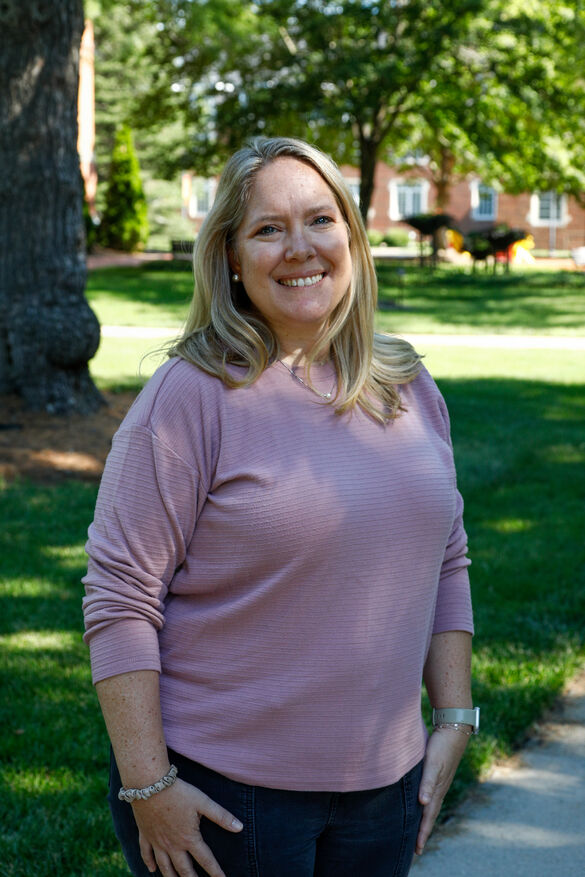
“It’s not easy being a teacher, so it’s our job to ensure we are providing the best experience to prepare them for the classroom,” Lerseth said. “Our goal is to develop exceptional people, good humans who are dedicated to helping every kid be successful and reach their potential. It’s the big reason we strive to provide these opportunities for our students.”
For Ruelle, she is enjoying her last few weeks of her summer break working as a nanny for a local family before she returns to campus in late August. Her senior year is set to be an exciting one, and she is ready to continue learning new skills and working toward her lifelong goal of becoming a teacher.
“Growing up, my teachers were always there for me,” she said. “I always had a teacher that really wanted me to succeed. I want to be that person in a student’s life. That’s why I want to become a teacher.”