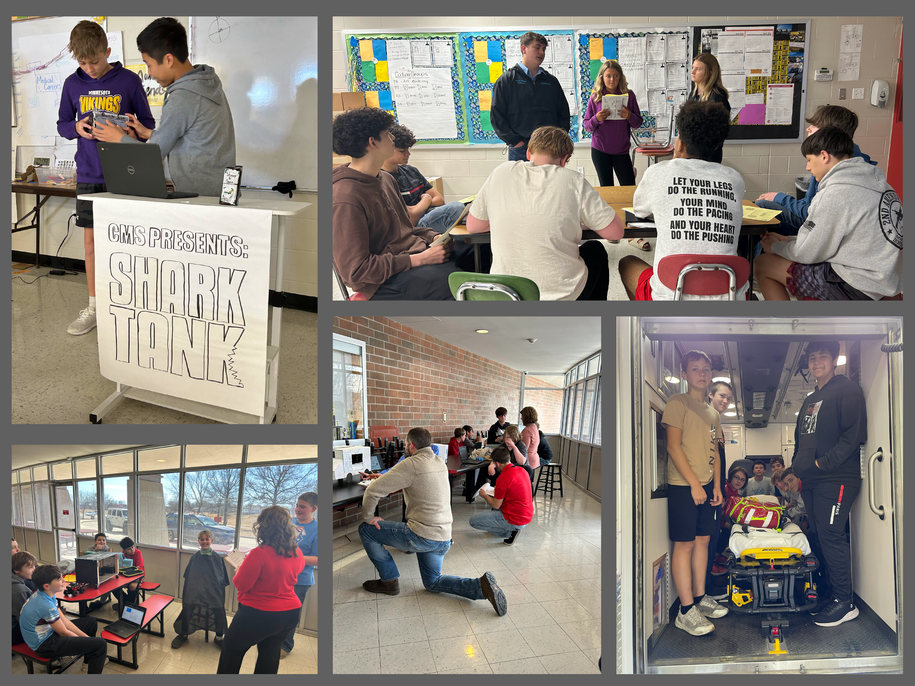

In today’s rapidly changing world, early exposure to career and technical education (CTE) is more important than ever for students. Middle school is a pivotal time when students begin to discover their interests and talents, making it the perfect stage to introduce them to the wide range of possibilities that CTE offers.
For CTE Month, Kari Arias, a CTE instructor at Chariton Middle School, describes why introducing students to hands-on, real-world learning experiences at this younger age can help shape their futures, broaden their horizons and set them on a pathway to success.
Q: Can you describe the CTE program you have at Chariton Middle School and how it introduces students to career pathways at an early age?
A: When I was hired two years ago, I was given the freedom to build a program from the ground up. Our middle school didn’t have a dedicated STEM program, so I integrated my STEM background into the existing careers program, which had previously been more focused on independent study and exploration.
Our sixth grade careers class takes STEM principles, focusing on the design process, inquiry-based projects and project-based learning. We layer in career elements by having students reflect on the skills and traits used in their projects and connect them to potential careers. For example, after building a bridge, we discuss the traits architects and builders need.
In seventh grade, we continue with career exploration. Students present career clusters to the class, and I survey students on their top three career interests and design project-based learning opportunities. The emphasis remains on reflection and developing employability skills.
Eighth grade shifts the focus to soft skills and self-reflection. We look at different learning and career pathways, including apprenticeships, two-year and four-year degrees, graduate school and entrepreneurship. Major eighth-grade projects include a “Shark Tank”-style presentation to local business leaders and the creation of their four-year high school plan.
Q: What are the key technical and non-technical skills that students develop through this three-year CTE experience?
A: Collaboration is the biggest one. Students often work in groups, sometimes not of their own choosing, which pushes them out of their comfort zones and helps them work through differences. They learn to take on group roles and responsibilities, practice problem solving, conflict resolution and present their work. These are essential skills for any workplace and are woven into every project.
Q: How does introducing CTE exposure and principles in middle school help address workforce needs in your community?
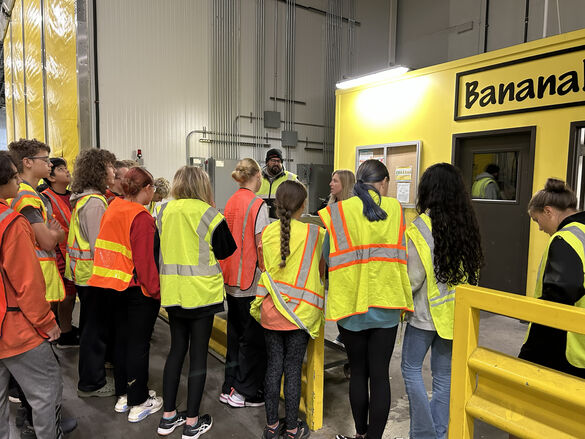
A: We work closely with Lucas County Economic Development. Our eighth graders also participate in a community tour called “Grow Our Own,” organized by the economic development team, to see local industries and job opportunities. Throughout our projects, I connect students’ interests with relevant high school courses and local career options. Regular meetings with the high school CTE team help me align middle school projects with the high school CTE curriculum so that we create a clear pathway for students.
Q: How important is community and business involvement to your program’s success? What partnerships do you rely on?
A: Community involvement is huge. Hy-Vee, which is our community's largest employer, regularly donates materials for student projects. Seats Inc. and Johnson’s Machine Works allow students to tour and even shadow at their facilities. Lucas County Health Center provides guest speakers and project ideas. Being in a small town helps with existing relationships making it easier to find guest speakers, arrange tours and set up work-based learning experiences.
Q: How have you seen these visits and experiences help students identify future postsecondary opportunities?
A: I recently had a student list medical-surgical nurse as a career interest after a health care facility tour. Last year, some students became excited about animal science after hearing from our high school FFA group and learning about large-animal chiropractic careers. These experiences show how exposure and exploration can shift and shape students’ aspirations. For example, a student might start out wanting to be one thing, then, after doing a project and listening to professionals, decide they’re more interested in something else in that field. The exposure to real-world information helps them refine their goals.
Q: What resources or supports are most critical for a successful CTE program at this level?
A: Access to professionals in the field through job shadowing, guest speakers or work-based learning, is instrumental. Students need opportunities to connect with people living those careers to see beyond what they imagine. Community support, mentorship, shared resources, and collaboration with other teachers are also crucial. I’ve benefited from local mentors and shared materials, which made building this program much easier.
Visit the Iowa Department of Education’s website to learn more about CTE programs and career and technical student organizations in Iowa.
For more information on ways to celebrate CTE Month, visit the Association for Career and Technical Education’s website.