

From physics and engineering to medical research and agriculture, there is a vast array of STEM topics taught today in Iowa schools. At the helm, representing outstanding science, technology, engineering and mathematics teachers across the state, is the 2026 cohort of Iowa STEM Teacher Award recipients. These six dedicated teachers are making a difference in the lives of students across the state by providing excellent curriculum, encouraging lifelong learning and inspiring a passion for STEM beyond the classroom and into the future.
The Iowa STEM Teacher Award, sponsored by Google and distributed by the Governor’s STEM Advisory Council at the Iowa Department of Education, is presented annually to one full-time, licensed PK-12 classroom teacher in each of the six STEM regions in Iowa.
This year’s six regional Iowa STEM Teacher Award recipients were honored in a ceremony during STEM Day at the Capitol on Feb. 18. We checked in with each awardee and asked them to share what the honor means to them, their inspirations and what excites them about the future.
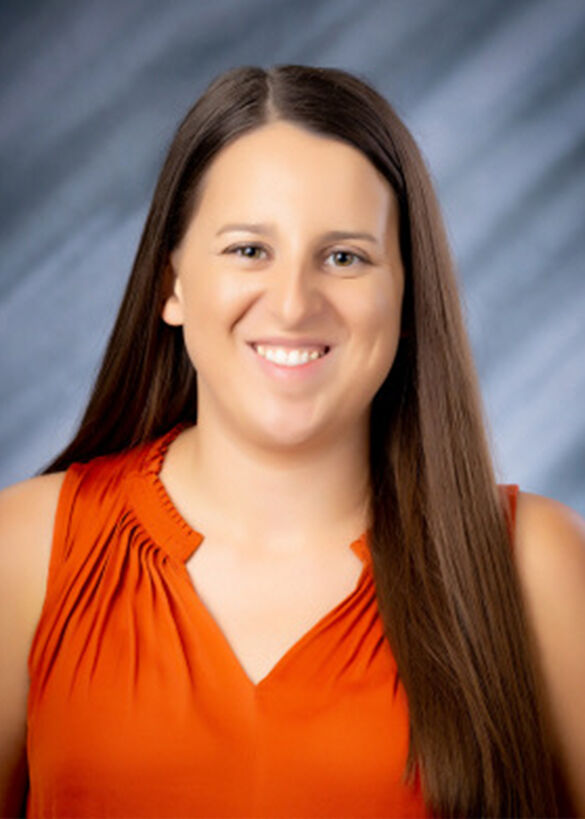
Today, we are highlighting Anna Brooks, an agriculture teacher at Ames High School in the North Central Iowa STEM region. Brooks is in her eighth year of teaching.
What went through your mind when you learned you were being named an Iowa STEM Teacher Award recipient and what does the honor say about the impact you have achieved?
When my students walked into my classroom 7th period and Justin [Lewis, Iowa STEM bureau chief] presented me with the award, I was shocked and honored.
I am beyond honored and humbled by this award. I am grateful for my school, my administration and my students for their support and efforts. The students are why I do this job: to give them opportunities and experiences to go into the world and pursue amazing careers. Ames High School is a great place to work and grow as a teacher and educator, and my students are truly amazing.
My students' learning about agriculture and the world around them is everything; combining skills and preparing them for the real world is my goal.
Teaching is itself much like the agricultural content I teach. It takes time to plant the seeds and watch the growth before seeing the final product. As my own agriculture teacher, Mr. Fowler, used to say, “It’s like watching a forest grow.”
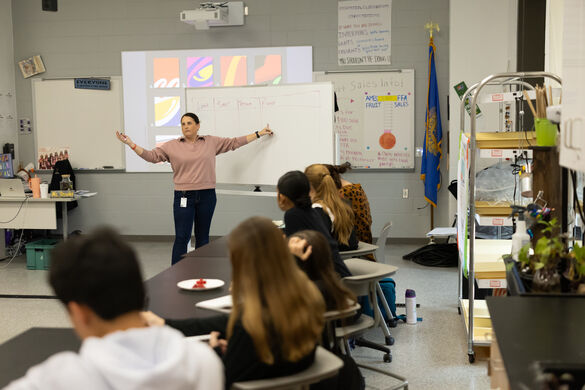
My lessons aim to identify the knowledge or content I want my students to leave the classroom with and to tailor the class to the clientele in the room. All students deserve a chance to succeed, and they will have that opportunity in the agriculture department. While this position focuses on improving students' learning, I also ensure that all my students leave my classroom knowing my high expectations for academic success, which contributes to their future success. Above all, in the content, field trips, experiences and life lessons, my goal in educating students is simple: I want them to walk out of my classroom with skills, confidence and the knowledge that no matter what they want to do in life, they can succeed.
Can you share a moment, project or interaction that captures why your work as a STEM teacher is impactful?
Any time I do labs, have students engage in real-world activities and use applications, I can see the impact. Watching one of my former students graduate, choose to pursue a career as an agricultural educator and student teach this semester has been gratifying. I love seeing my students grow and become passionate about agriculture.
How do STEM lessons in your classroom encourage students to think independently while also developing soft skills as a result?
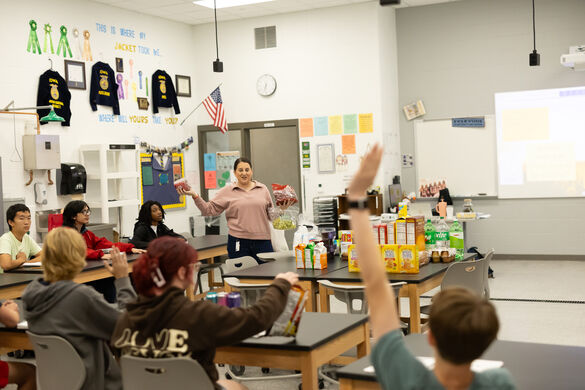
All lessons in my classroom are designed with real-world applications, problem-solving and encouragement to think outside the box or work independently. Students analyze data, test ideas, troubleshoot failures, justify decisions through labs and experiments, grow plants and animals, take ownership of their learning and reflect on outcomes. Soft skills are worked into the class through teamwork, presentations, peer feedback and leadership roles. Students develop confidence, professionalism and problem-solving skills alongside technical knowledge, preparing them for life after high school.
What can we look forward to, or what’s next, for agricultural education?
Looking to the future of agriculture education, our school emphasizes real-world partnerships and experiential learning by connecting students with industry, higher education and community organizations through hands-on projects, technology-focused labs and authentic problem-solving. This includes training and working with various Ames organizations, state and national programs.
If you had to sum it up in a sentence or two, what keeps you coming back to this work?
My students. Their continued growth, from nervous and quiet to confident leaders, seeing the freshmen eventually become seniors, growing in knowledge and understanding, reminds me why this work matters.
The Iowa Department of Education congratulates Anna Brooks on her award and dedication to STEM education.